

A sports tournament can attract registrations and still leave a team wondering what actually worked. Did people make a pick? Did they enter another competition? Did a pool creator bring the same group back?
Those questions deserve separate answers. At Bet Max Action, we use reporting to examine the steps between discovering a competition and choosing to play again. That helps turn the next tournament into a more informed decision.
Start with the decision you need to make
Before opening a dashboard, write down the decision the report should support. A media team might be choosing a recurring format. A venue might be comparing two event schedules. A community host might want to understand why invitations have not become participation.
Pick one primary question, a defined audience, and a complete reporting period. Keep the sport, tournament duration, and opportunity to play in view. Comparing an unfinished contest with a completed one can produce a persuasive chart and an unhelpful conclusion.
Separate registration from participation
Registration tells you someone created an account. A placed pick tells you they reached a meaningful part of the competition. Neither tells you, by itself, whether they enjoyed the experience.
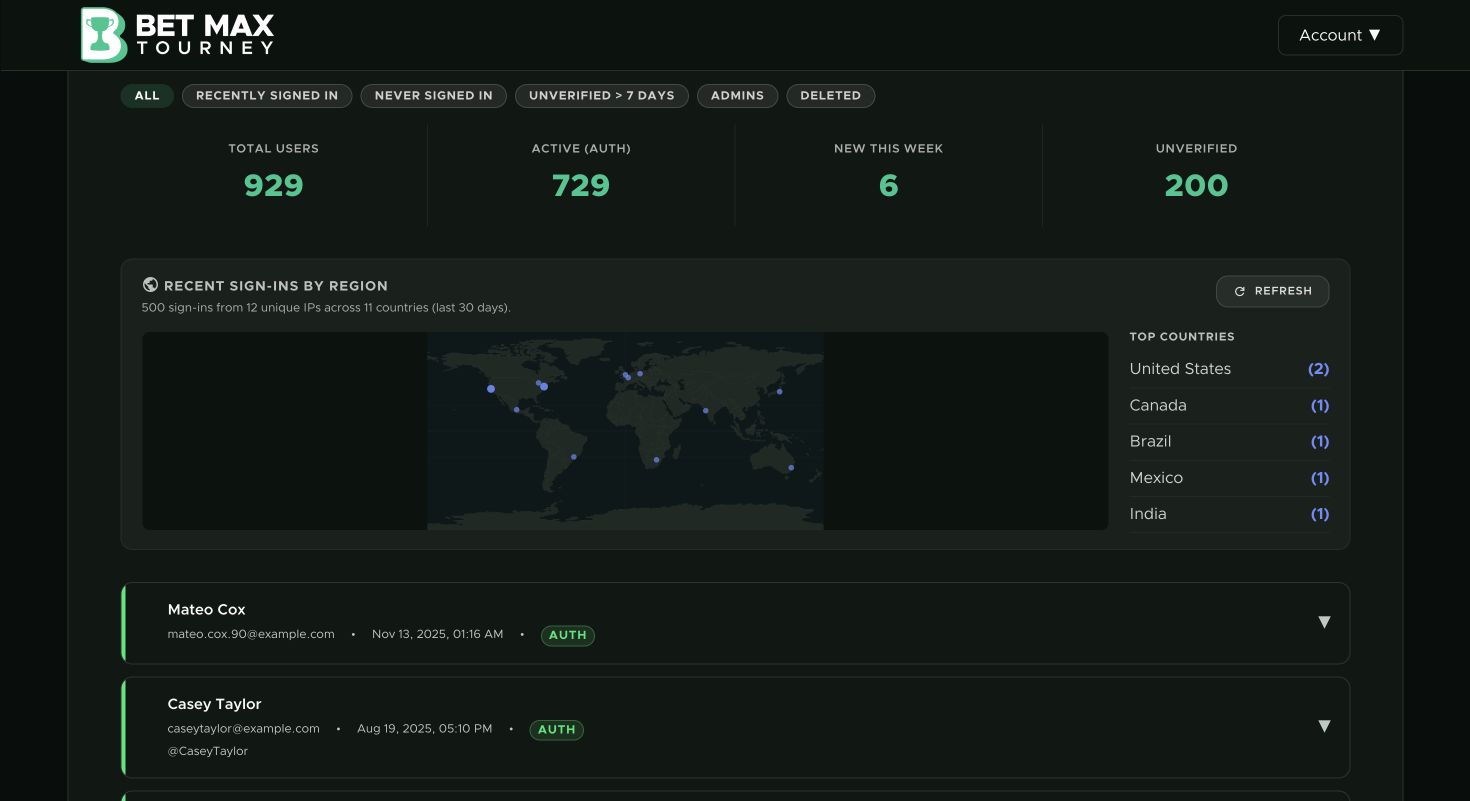
Our internal reporting includes account and gameplay activity so we can examine these different behaviors. The useful next question is where to investigate: discovery, entry, understanding the rules, or making the first selection.
Give repeat play a clear definition
“Returning player” can mean someone opened the app, placed another pick, or entered a different competition. These are useful signals, but they answer different questions.
For example, our mode reporting defines repeat participation as picks in two or more competitions of that mode during the selected period. Our cohort reporting looks for later pick activity among groups of newly registered accounts. A recent cohort needs enough time to reach the observation window before its result can be evaluated.
Define the behavior before celebrating the number.
That discipline matters when a team is deciding which format to repeat. More activity in a longer tournament does not automatically mean stronger preference for that mode.
Understand the host as well as the player
Private pools add another relationship to measure. Someone has to create the contest and invite the group. The group’s experience affects whether that person wants to organize another one.
We examine pools created, pools with invitations, accepted invitations, pools with picks, and repeat creators. Our current pool report combines period activity with retained invitation and completion states. These are independent stage counts, not a historical conversion funnel. Dividing one number by another without checking the definitions can mislead.
Used carefully, these measures help identify questions worth asking: Are hosts sending invitations? Are invited players participating? Are hosts choosing to organize again?
Use the report to shape the next tournament
Choose one change to evaluate: a clearer invitation, a different time window, or a format better suited to the audience. Compare like periods and keep the sample size visible. Reporting can show a pattern; establishing that a particular change caused it requires a suitable comparison or experiment.
The screens shown here are internal Bet Max tools. Partner reporting scope and access are discussed as part of an implementation. Tournament Dollars are gameplay units, not revenue, and the example imagery is not a customer performance claim.
Start with what you want to learn. Then design a competition that gives you a useful way to learn it.
Discuss a tournament for your audience, or explore how to design the branded experience.